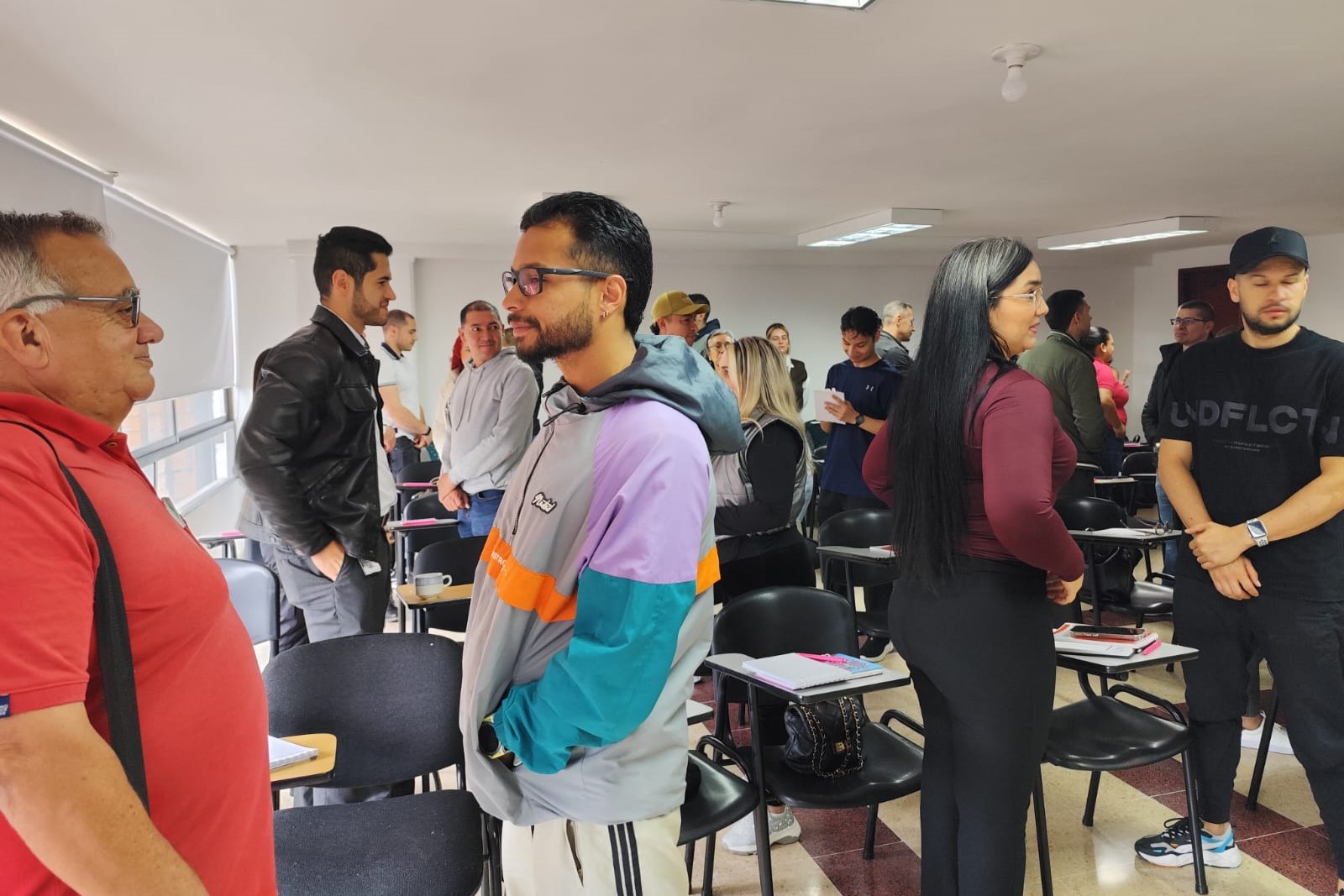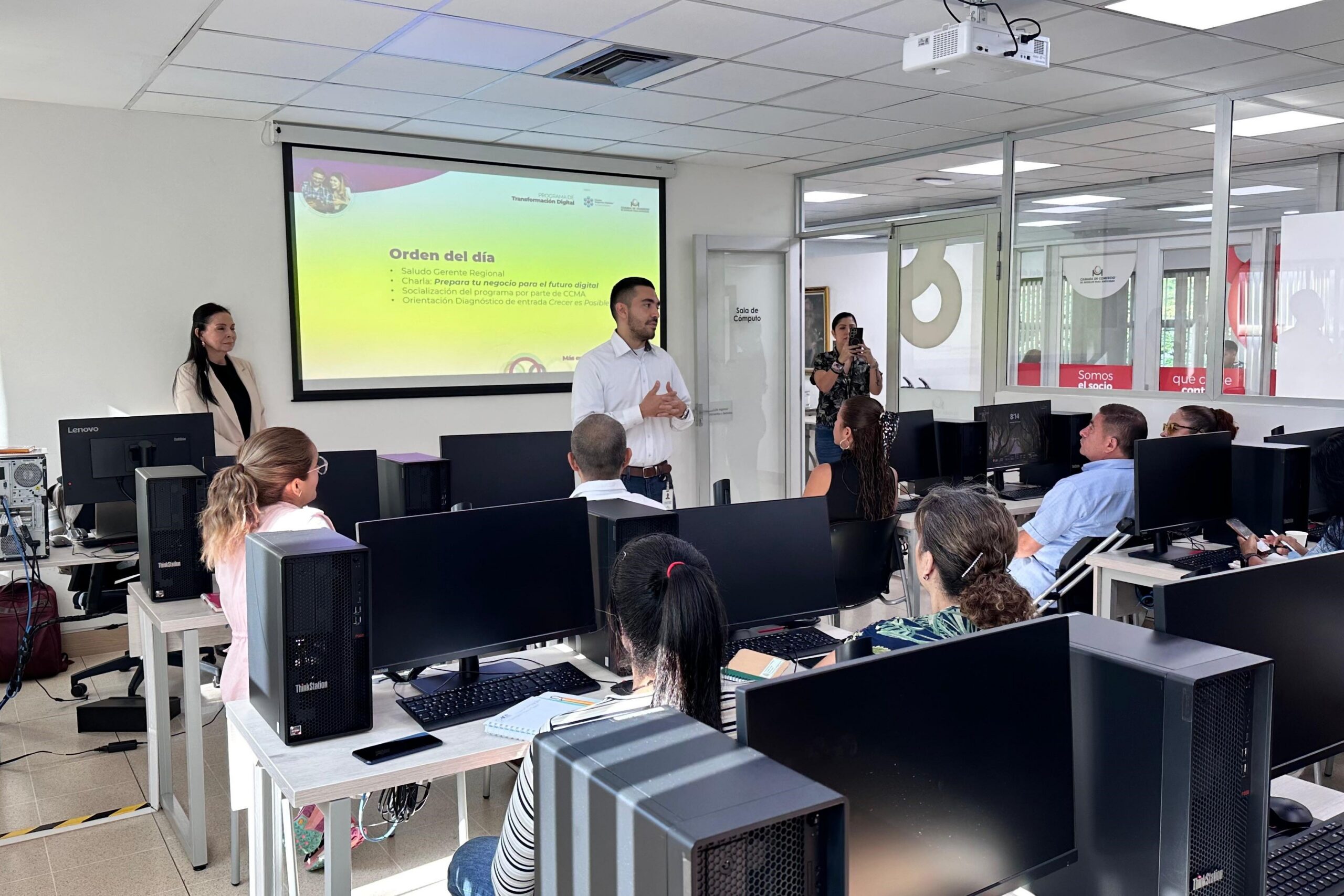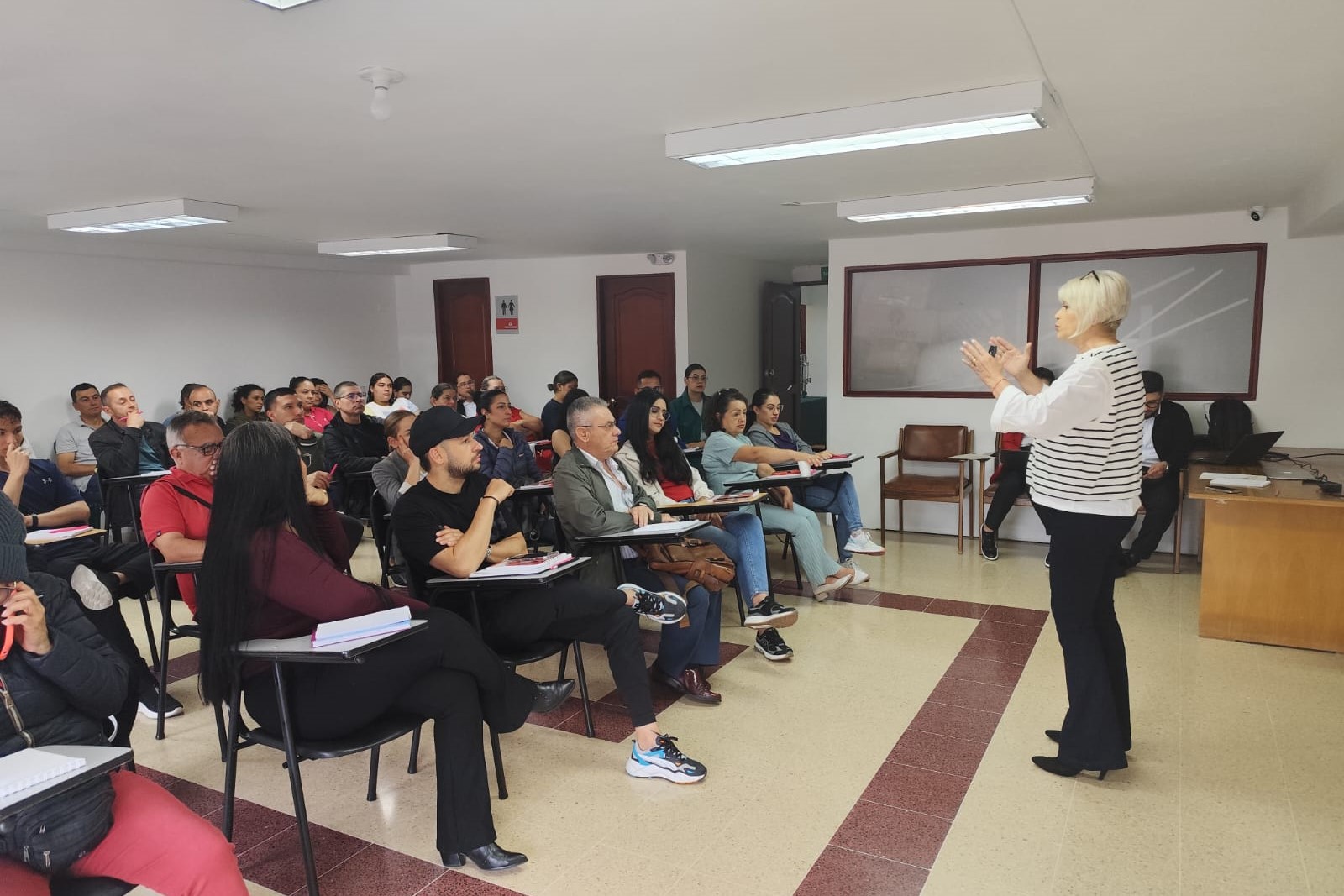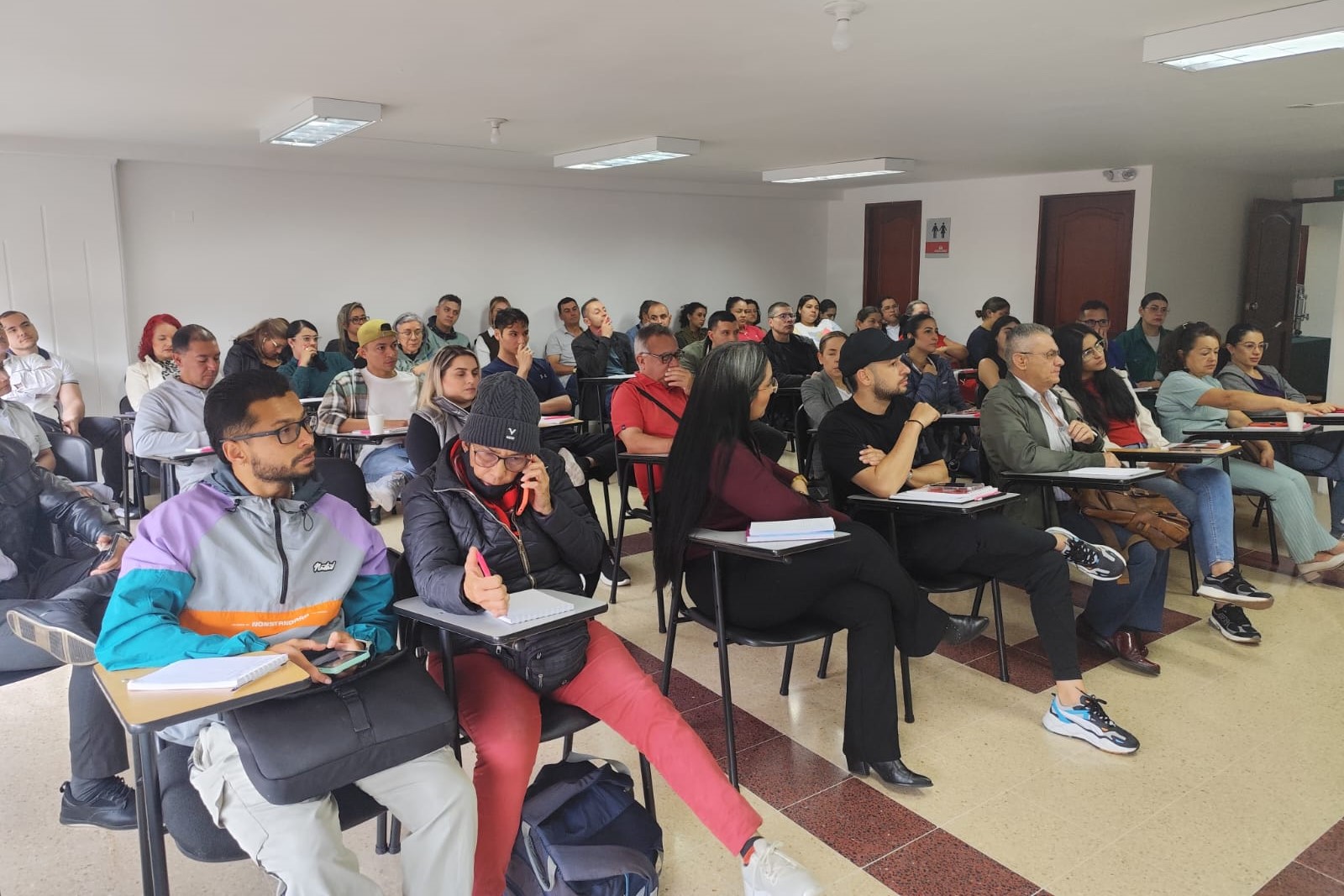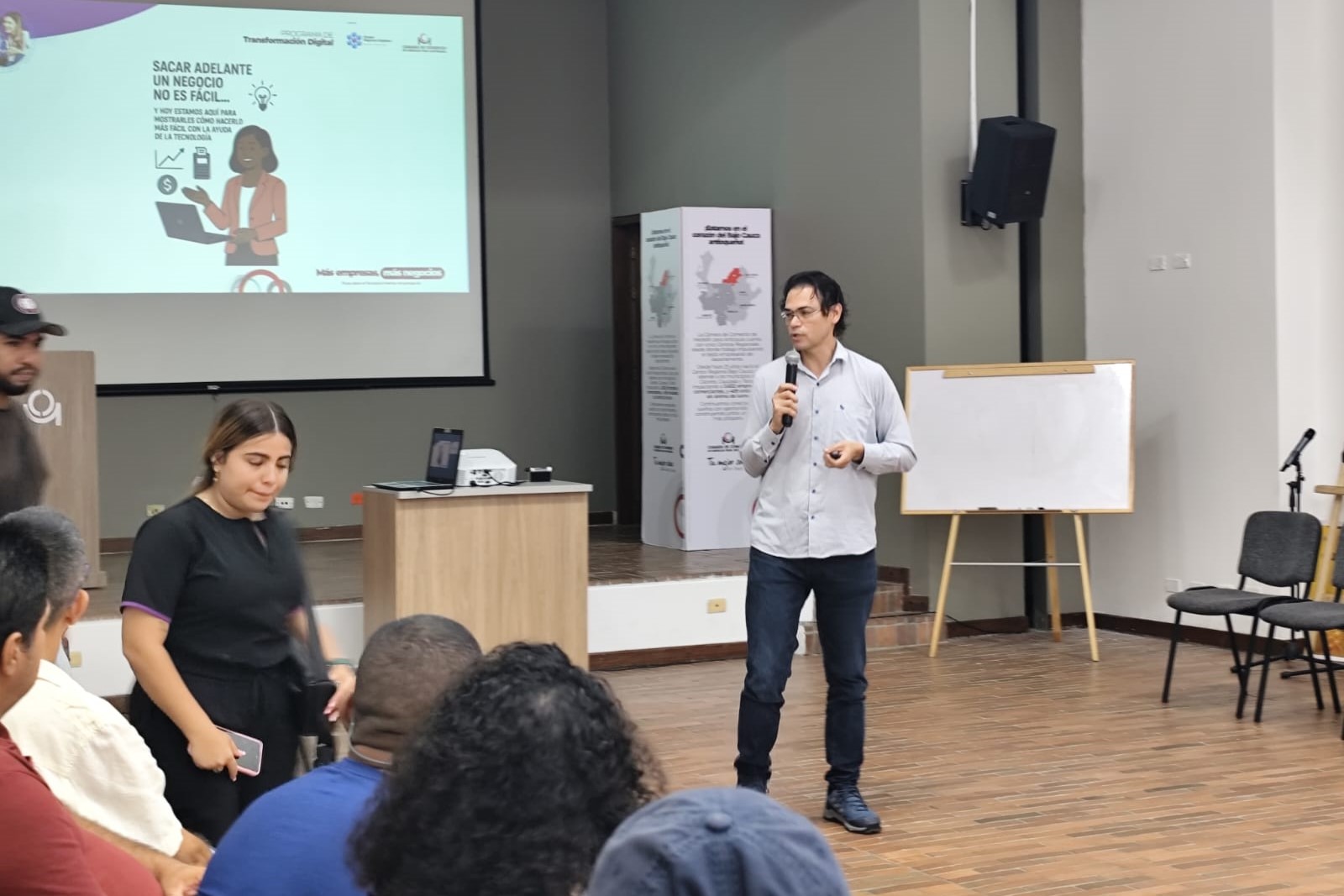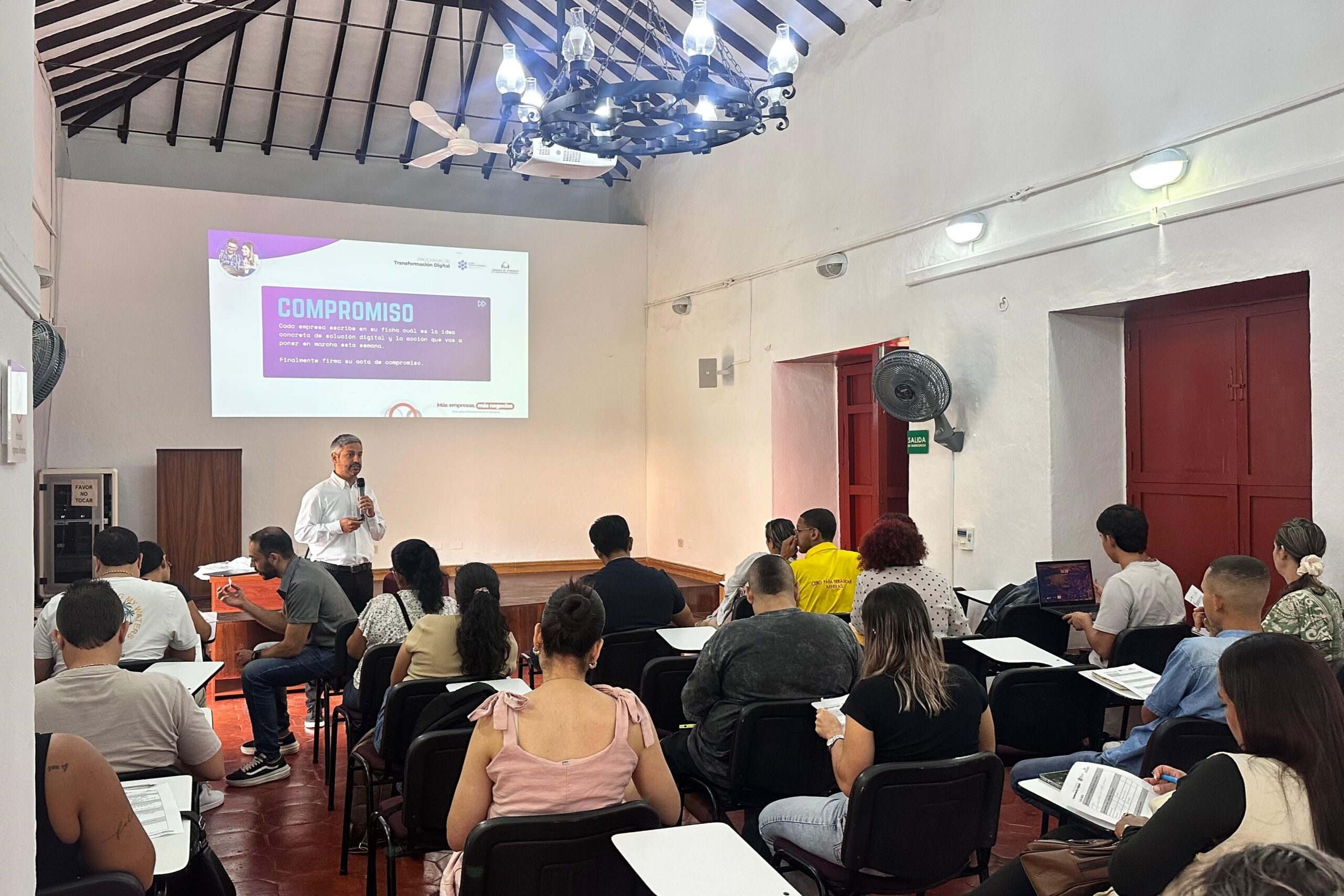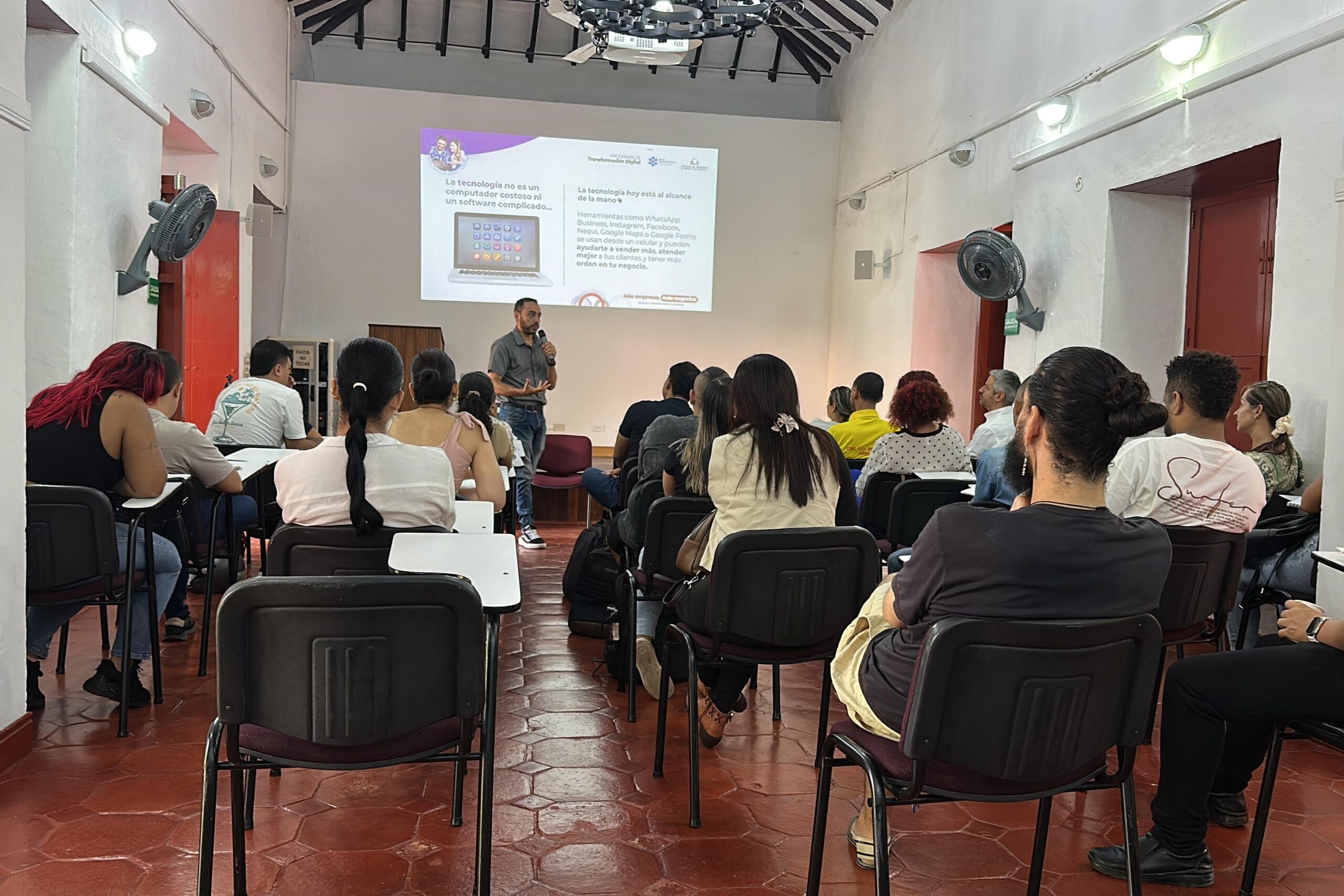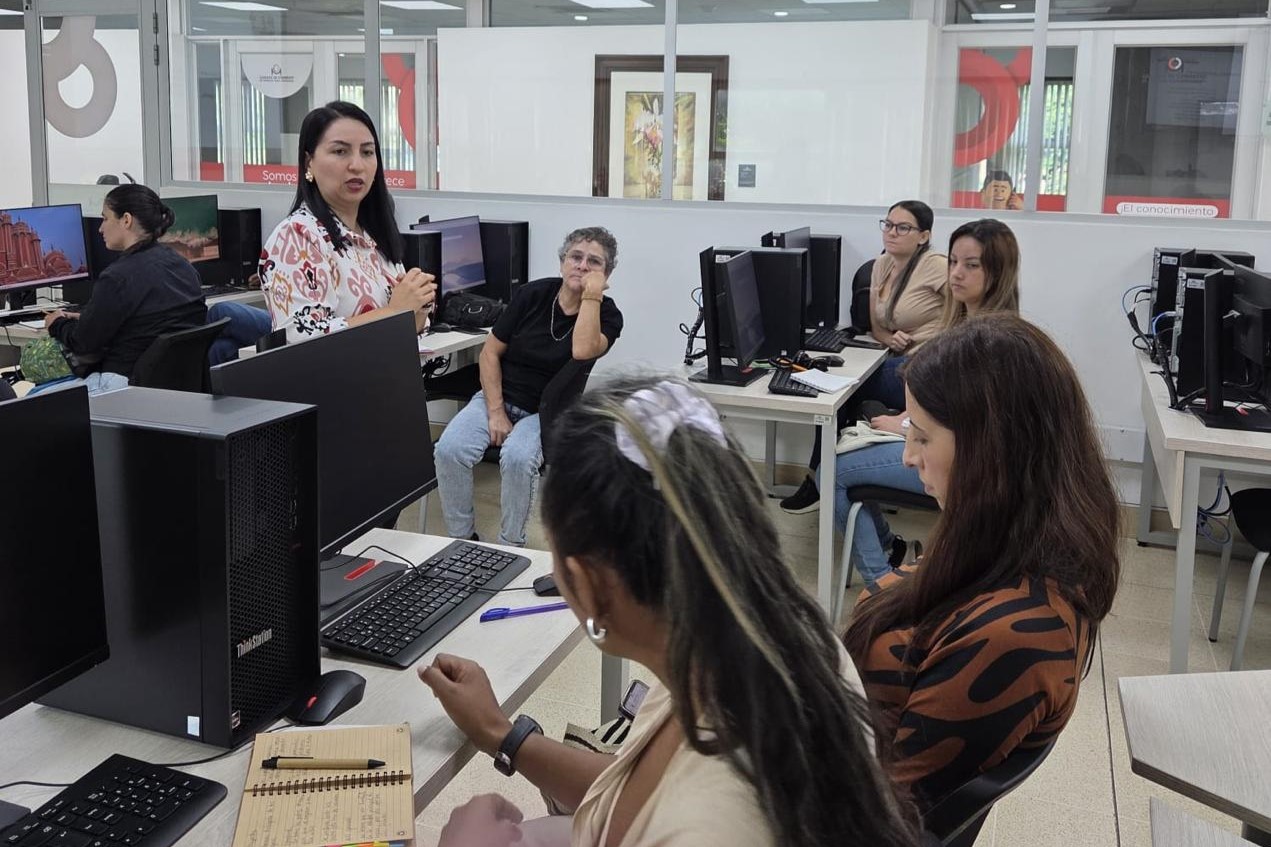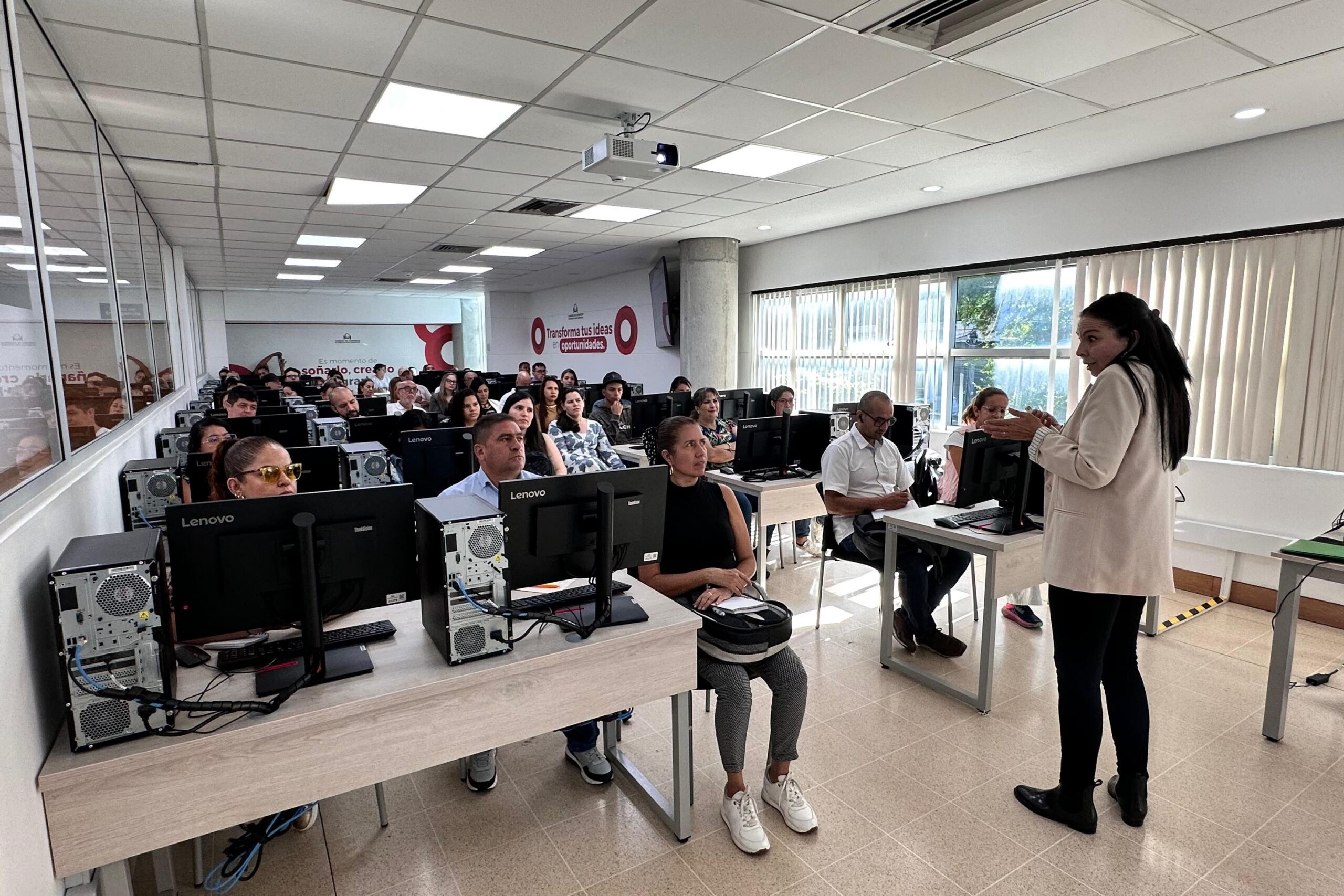
In 2025, we articulated our capabilities and experience with the Medellin Chamber of Commerce for Antioquia (CCMA) in an alliance aimed at a common purpose: to bring technology to micro and small businesses in Antioquia as a real tool to strengthen their businesses and project their sustainability.
The Digital Initiation Programhe program starts from the recognition of a shared reality in the regions: for many entrepreneurs (48.6%), technology was still perceived as distant, costly or difficult to use. During seven months of implementation, the program was consolidated as a response to this challenge, combining accompaniment, training and practical advice to strengthen capacities, close digital gaps and lay real foundations for the competitiveness of participating businesses.
The Program seeks to promoting technological literacy and appropriation and small businesses, based on the recognition of their contexts, limitations and opportunities. Rather than talking about complex technology, the focus was on demonstrating how everyday, accessible and low-cost tools can improve management, sales, organization and customer relations.
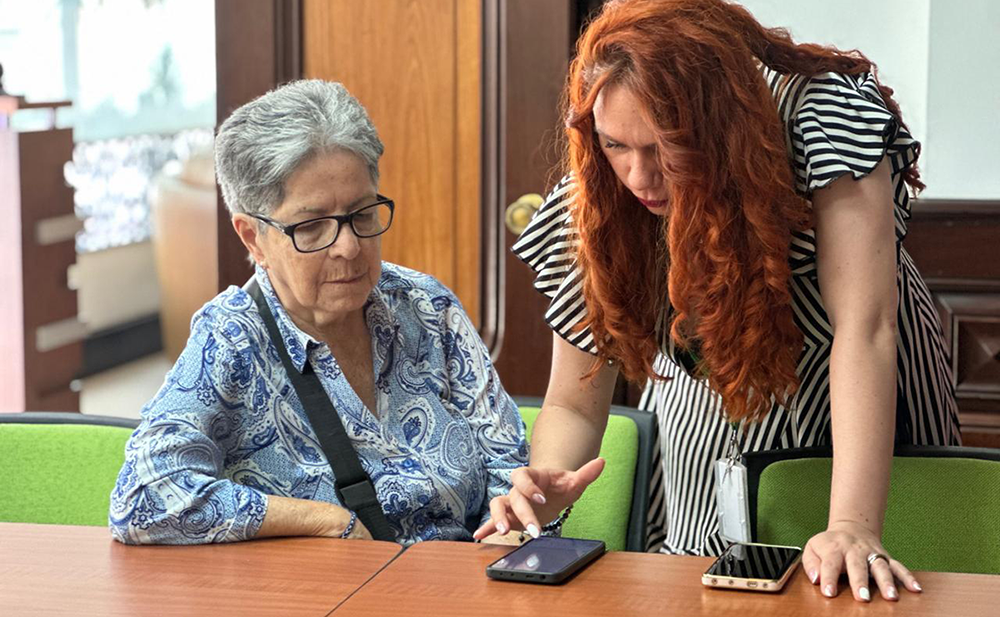
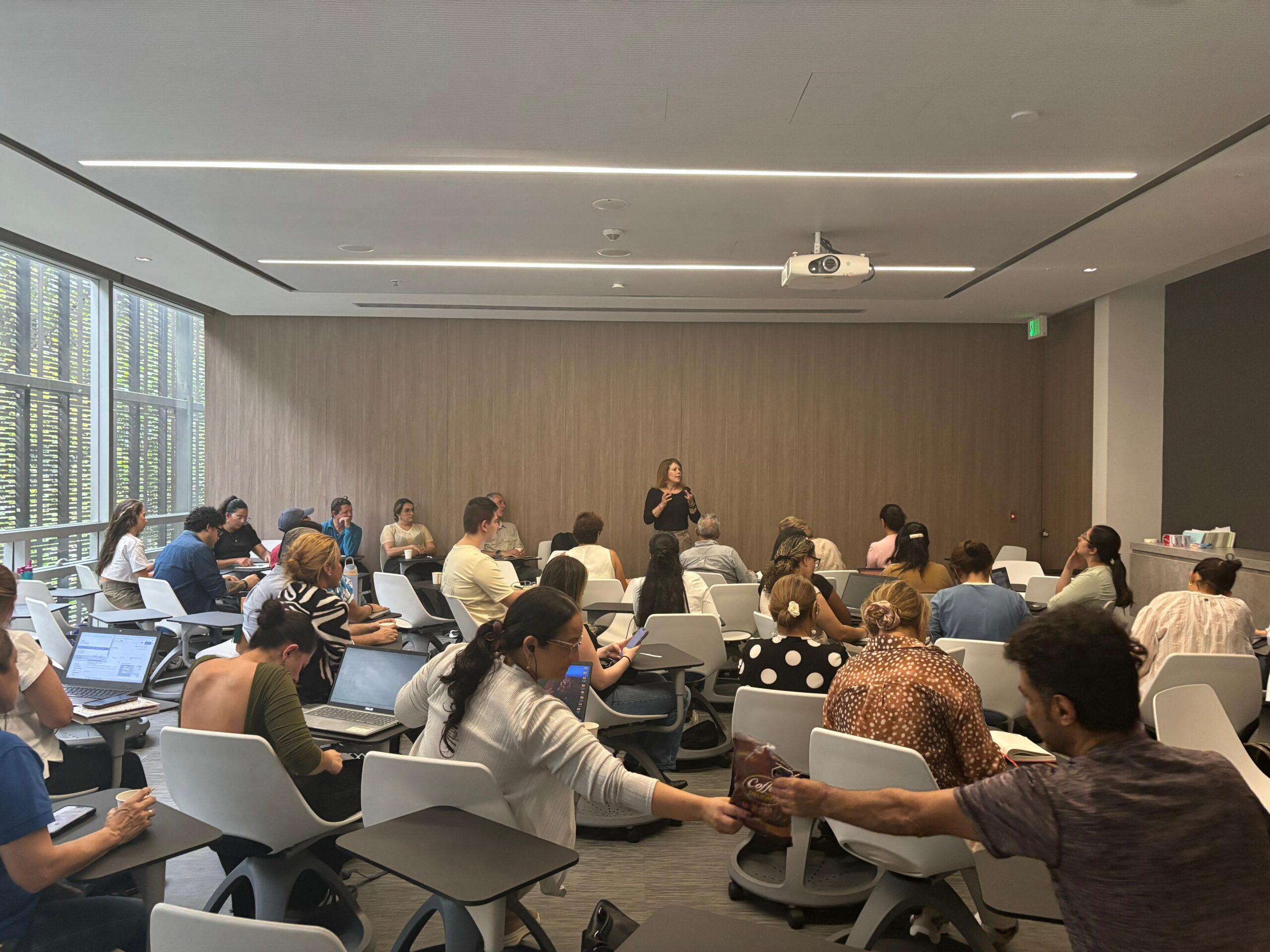
The accompanying route combined awareness-raising, a diagnosis to identify gaps and specific needs, group training, personalized consulting adapted to the reality of each business and business connection strategies to bring participants closer to other companies and allies, allowing each participant to advance progressively, according to his or her starting point and real needs.
The program directly impacted 125 microbusinesses and small formal merchants, located in five subregions of Antioquia: Aburrá Norte, Bajo Cauca, Norte, Occidente and Suroeste.
The themes of the program were developed from a practical and close approach, under the premise of learn by doing. Among the main areas worked on, the following stand out:
- Digital awareness: to raise awareness of the importance of technology as a business ally, dispelling the idea that it is costly or complicated and showing its usefulness in daily operations.
- Digital literacy for business management: focused on the use of accessible digital tools to support management, sales, customer service and information organization.
- Strengthening of basic administrative processes: by assisting in the organization of tasks, data management and the adoption of digital practices that facilitate decision making.
- Individual accompaniment: through personalized consulting that allowed the contents and tools to be adapted to the reality, the level of maturity and the specific needs of each business.
- Business connection: spaces for relationships with suppliers and allies of the digital ecosystem, aimed at bringing relevant technological solutions and generating real opportunities for implementation.
At the close of the program, 124 companies completed the exit diagnostic, This made it possible to measure concrete progress in technological appropriation. The results show significant improvements, especially in the operational aspect, The use of digital tools for daily management, the automation of administrative tasks and the use of information to support decision making.
Significant progress was also made in terms of the vision and strategy, In this component, businessmen began to understand the role of technology as a strategic enabler and not only as an operational support. In the component of technological infrastructure, In addition, there was evidence of greater order in the information, improvements in connectivity and the use of cloud-based tools, laying solid foundations for digital sustainability.
The program helped businesses to be more open to change, strengthen their digital presence and make frequent use of digital channels to communicate with customers, recognizing that these processes require continuity and leadership to consolidate.
At the territorial level, execution in the various subregions made it possible to bringing training and support closer to local contexts, facilitating the participation of merchants in their own municipalities and strengthening the regional business fabric.
As part of the process, the program included the delivery of incentives to support the implementation of digital solutions in participating businesses. Through an incentive plan, 53 companies in the five subregions received support worth more than $133 million pesos, executed directly with suppliers of the digital ecosystem. These incentives provided access to tools such as software licenses for invoicing, inventories, customer management (CRM), digital presence, basic guidelines and strengthening of technological infrastructure, ensuring that the lessons learned were translated into concrete actions.
The Digital Startup Program demonstrates that digital transformation doesn't start with large investments, but rather with trust, support and practicality. For many microbusinesses, this process was the first step to better organize their business, improve their relationship with customers and visualize new growth opportunities.
From Makaia, we reaffirm our commitment to the use of technology as a tool for economic and social development, and with the strengthening of capacities that allow businesses to move forward towards a more sustainable and competitive future.