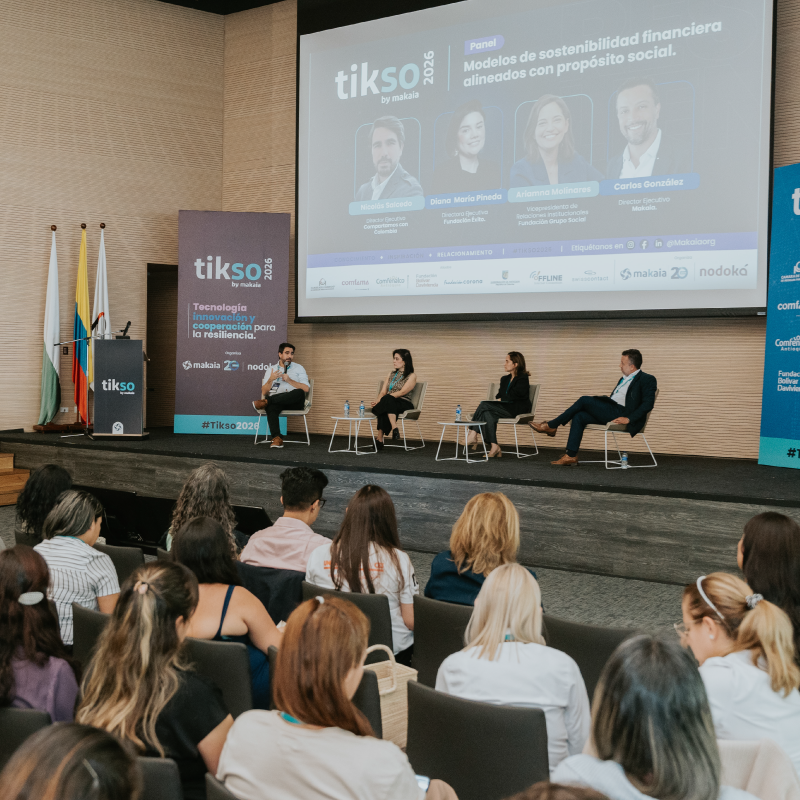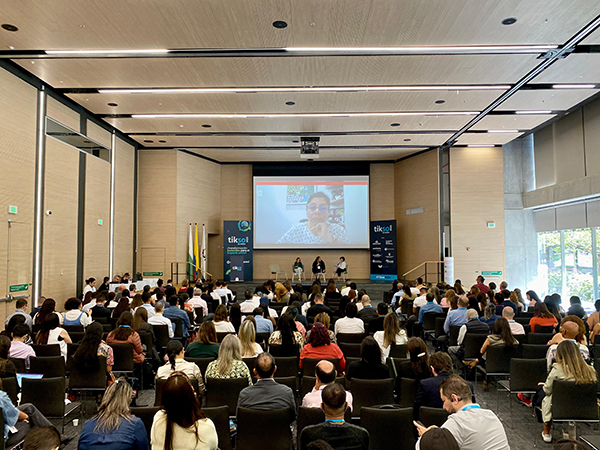
On September 24 and 25, we held a new edition of Tikso, our annual event focused on knowledge, cooperation, and technology for social impact. Now in its seventh edition, Tikso 2025 once again brought together leaders, social organizations, international cooperation entities, and experts from the impact ecosystem to reflect, learn, and connect around the major challenges of sustainable development.
This year, Tikso reaffirmed its role as a regional meeting point by bringing together more than 570 participants—both in person and virtually—from 19 countries, which reflects an increasingly diverse, connected community committed to the social and technological challenges facing the continent.
The Academic Agenda Tikso 2025 was a space for reflection and learning that integrated technology, innovation, and cooperation. With the participation of 29 national and international speakers from 25 organizations, we develop eleven academic spaces including panels, impactful dialogues, and workshops which addressed strategic issues for the future of the social sector. Topics explored included technology applied to social inclusion, innovation to bridge digital divides, the use of artificial intelligence for knowledge management and decision-making, ethics and algorithmic biases, new forms of financing for development, and organizational resilience. In addition, the participation of international voices and the hybrid approach of the event allowed for broader perspectives and facilitated a richer exchange between regions, experiences, and approaches.
One of the most important milestones of Tikso 2025 was, once again, the Cooperation and Partnership Roundtable. This space, designed as a driver of strategic relationships, brought together 30 cooperating organizations and 61 recipient organizations to foster meaningful encounters aimed at mobilizing resources, building alliances, and identifying concrete opportunities for institutional strengthening. During the Roundtable, 310 meetings were held., which project cooperation agreements worth around COP $17 billion, a result that demonstrates the effectiveness of this format in bridging gaps between organizations, connecting real needs with sources of funding, and consolidating a more coordinated ecosystem. The interest and active participation of local, national, and international organizations confirm the value of this space as a key tool for enhancing collective impact.
The 2025 edition also featured the support from strategic partners who made it possible to consolidate a meaningful experience. We are grateful to the organizations that joined us as sponsors and partners, contributing their trust and commitment to the development of the social sector. Their participation reaffirms the value of building together, pooling capabilities, and opening spaces where different perspectives can come together to broaden visions and generate innovative solutions.
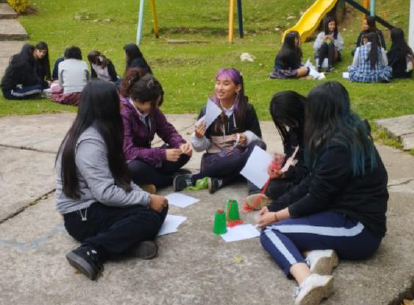
Tikso 2025 was also a space designed for human interaction. During the day, participants were integrated networking activities specially designed to facilitate meaningful conversations, promote new connections and strengthen collaboration among attendees. Spaces were created to connect interests, explore opportunities, and expand professional networks in a purposeful, approachable, and useful way.
More than just an event, Tikso is a living platform for knowledge, cooperation, and transformation. The results for 2025 show that the connections and lessons learned will continue to strengthen organizations and open up opportunities to move toward more inclusive, sustainable, and innovative development in the region. With this conviction, at Makaia we are already working on Tikso 2026, committed to expanding its reach, deepening its impact, and continuing to be a meeting point for those who promote social solutions through technology, innovation, and collaboration.