Colombia has 12.7 million young people, representing 24.4 % of the national population (DNP, 2022). 18 % of them are unemployed. Nearly half work in the informal sector. And more than one in four—especially women—neither study nor work, not because they don’t want to, but because the pathways to the formal labor market do not reach them (DANE, 2024).
This gap is not new, but there are concrete solutions. At Makaia, we’re joining the LOAD Project, an international cooperation initiative coming to Medellín, Bogotá, Cali, and Barranquilla with a clear purpose: to connect more than 1,576 vulnerable youth to the digital world, the job market, and entrepreneurship. It’s free and comes with real support.
What is LOAD, and why is it important?
LOAD—which in Italian stands for Work, Employment, and Digital Literacy—is an international cooperation initiative led by Fondazione L’Albero della Vita, funded by the Italian Agency for Development Cooperation (AICS), and supported by APC Colombia.
What makes this project unique is its starting point: the conviction that the problem lies not in a lack of motivation among young people, but in the gap between what the labor market demands and what training systems have been able to offer. Closing that gap—in skills, access, and concrete opportunities—is exactly what the LOAD project was designed to do.
In Colombia, this gap has concrete dimensions. In cities like Barranquilla, more than 54 % of young people work in the informal sector (Cómo Vamos Cities Network, 2023). In Bogotá, 37 % of young people are neither in formal employment nor in education (Corona Foundation, 2023). And young women face an additional burden: they spend between three and four hours a day on unpaid domestic work, compared to an average of one hour for men, which directly limits their access to training and employment (DANE, 2022).
An ecosystem of partners with a real presence in the region
LOAD is structured as an ecosystem of organizations that contribute their areas of expertise in the regions where they have a tangible presence, rather than as a centralized program. Fondazione L’Albero della Vita leads the initiative and brings expertise in international cooperation and working with vulnerable youth across three continents. Comfenalco Antioquia, with decades of experience in training and entrepreneurship, leads the business creation process. The Bogotá Chamber of Commerce contributes its connections to the business ecosystem and leads training on gender inclusion for companies. SENA supports technical training and job placement. The ICBF facilitates access for young people in the criminal justice system. And APC Colombia ensures alignment with the country’s public policy. At Makaia, we contribute what we have been building for twenty years: training in digital skills with a social purpose.
Makaia's Role: From Digital Literacy to the Tech World
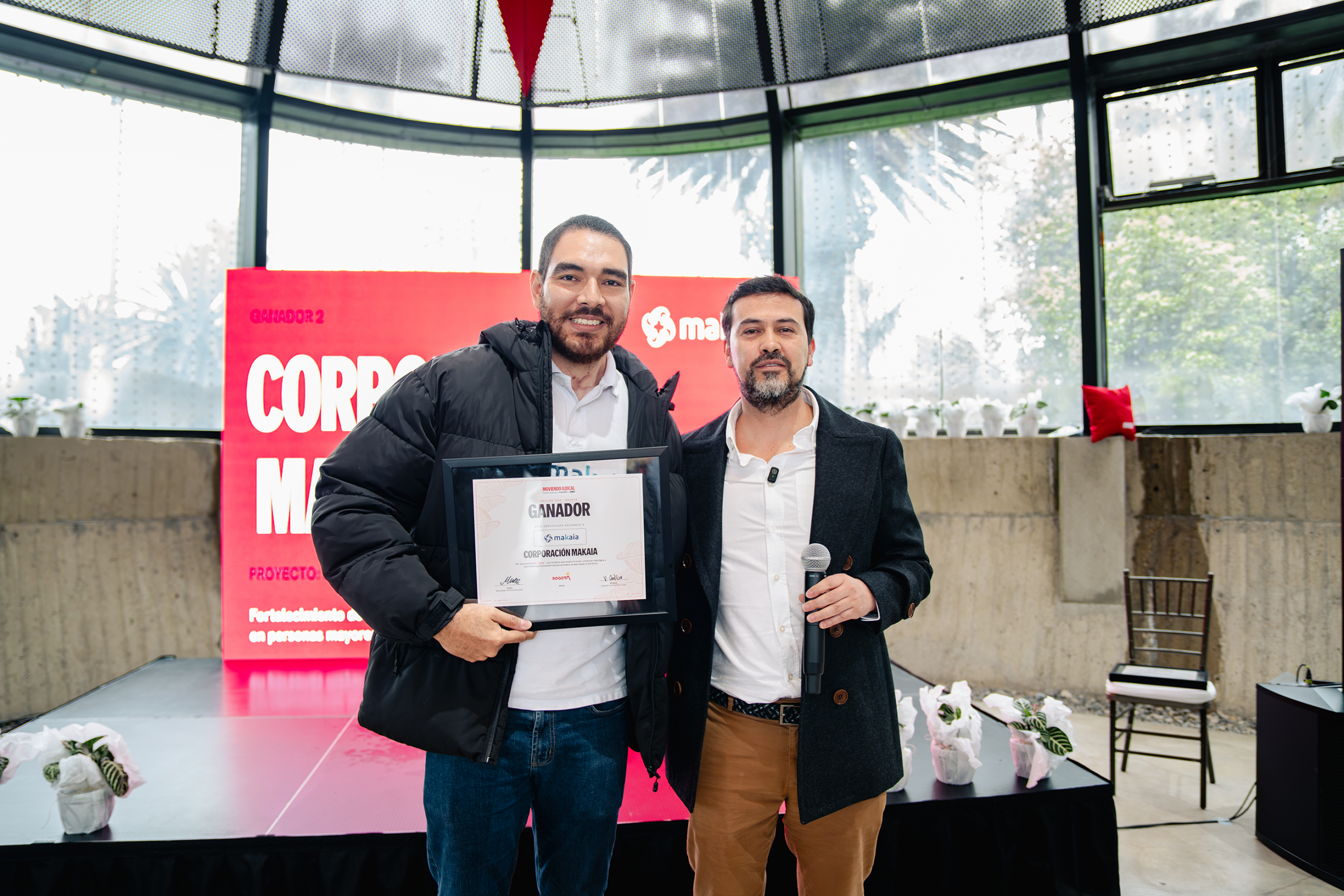
At LOAD, Makaia leads the digital training program: the backbone of the project. We guide all participants—more than 1,500 young people and 200 teachers from schools in underserved neighborhoods across the four cities—through a phased process that adapts to each person’s pace and interests.
The starting point is digital literacy: learning to confidently use everyday technological tools, from digital communication to collaborative work in virtual environments. From there, those who want to go further move on to strengthening their skills in science, technology, and mathematics—with an emphasis on critical thinking and numerical reasoning— and those who demonstrate the most progress gain access to an intensive training program in web development, data analysis, or cloud computing, with personalized support to connect with companies in the technology sector.
Our methodology is based on experiential learning and hands-on practice. Makaia’s ties to Colombia’s tech ecosystem allow us to connect participants with real opportunities: companies in the sector, opportunities to engage with the professional world, and personalized support in their job search.
In addition, we have launched a particularly significant initiative: a pilot program offering digital and STEM skills training to young people, both those at liberty and those incarcerated, in specialized care facilities. This initiative pushes the boundaries of what technology education can achieve.
Cooperation that starts at the local level
What sets LOAD apart is not just its scale—four cities, more than 1,800 direct beneficiaries—but the way it was designed: through fieldwork, data collected in collaboration with local governments and institutions, and nearly a year of co-design with partners on the ground. This is evident in the details: transportation subsidies to reduce dropout rates, psychosocial support for those who need it, and selection criteria that prioritize young people with the greatest potential.
For Makaia, being part of this is an opportunity to do what we do best, as part of a partnership that multiplies the impact of each organization. Registration is now open. If you know a young person between the ages of 17 and 28 in Medellín, Bogotá, Cali, or Barranquilla, please share this article and the registration link.